Ascension: Spiral Stair Case Study
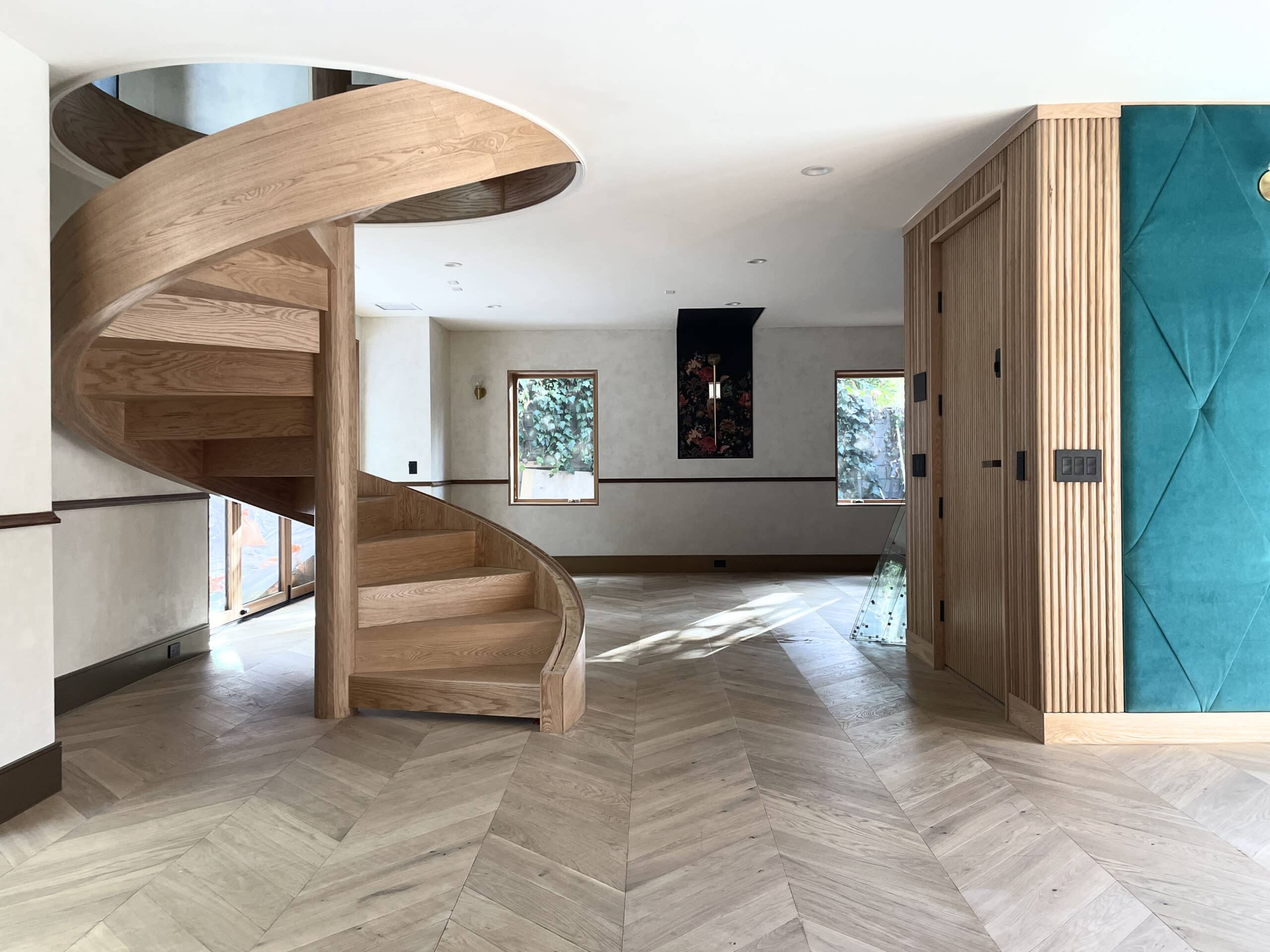
A gesture in wood and steel—this stair draws the body upward through form, force, and intention.
Ascending in Form: The Spiral Stair
Where Form Rises Through Force and Grace
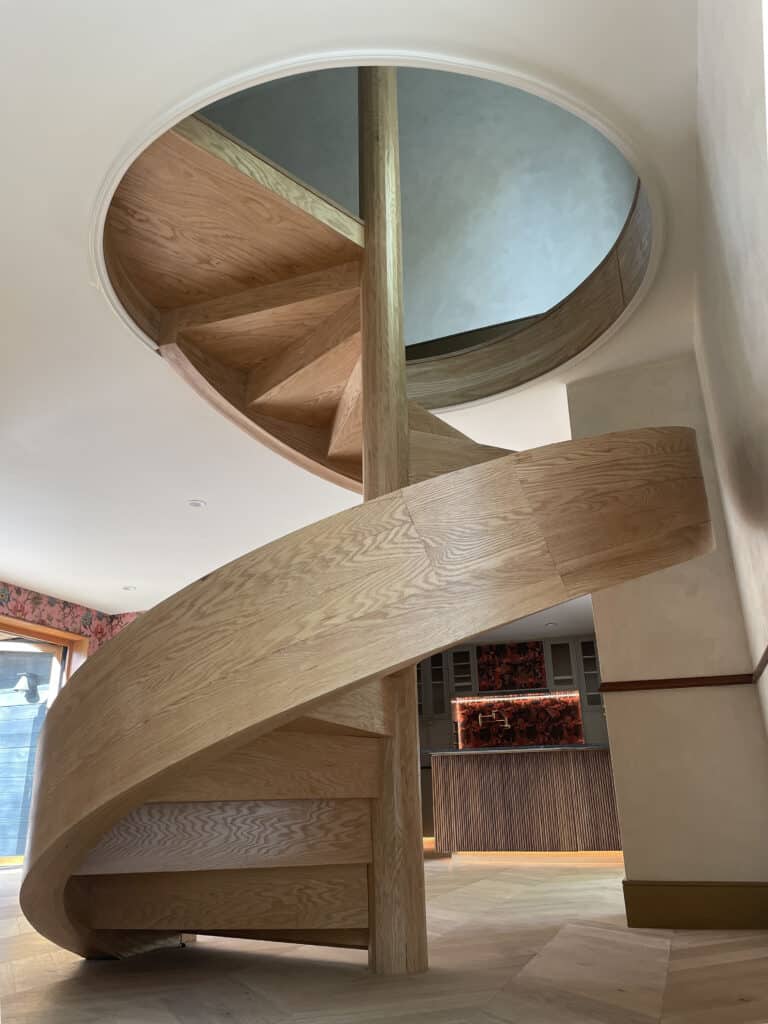
A sculptural stair drawn in space—this spiral is both structure and experience.
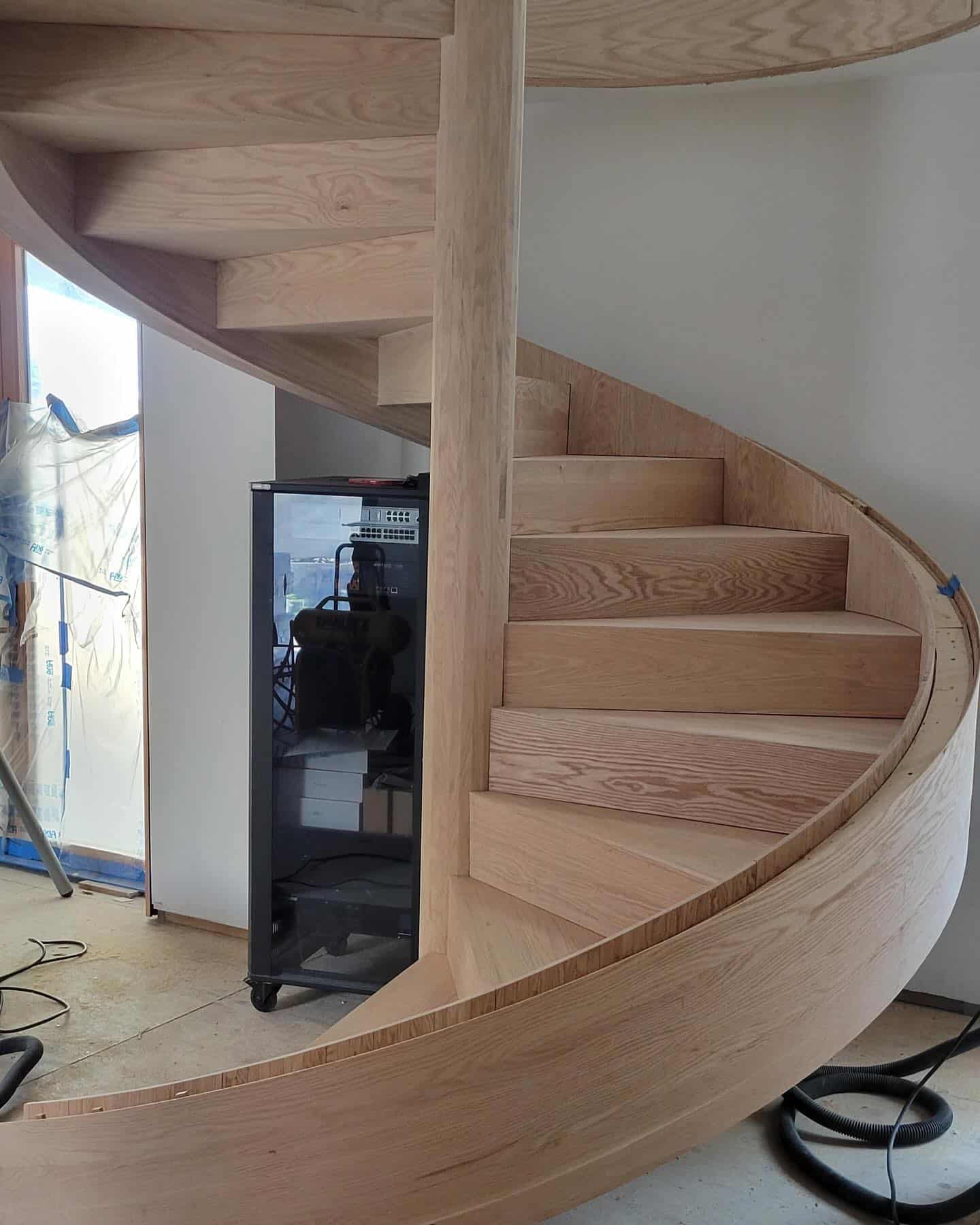
Crafted as a singular gesture in space, the spiral stair stands at the intersection of structure and sculpture. Solid white oak meets forged steel in a quiet duet of tension and release—organic materiality shaped by engineered intention. Each tread becomes an invitation upward; each curve, a meditation on control and surrender. It is not simply a stair, but a spatial instrument—designed to draw the body and the eye in a single, fluid ascent. Built in Los Angeles by UMPA Millwork, this piece reflects a belief in making as meaning, and in detail as destiny.
Layout
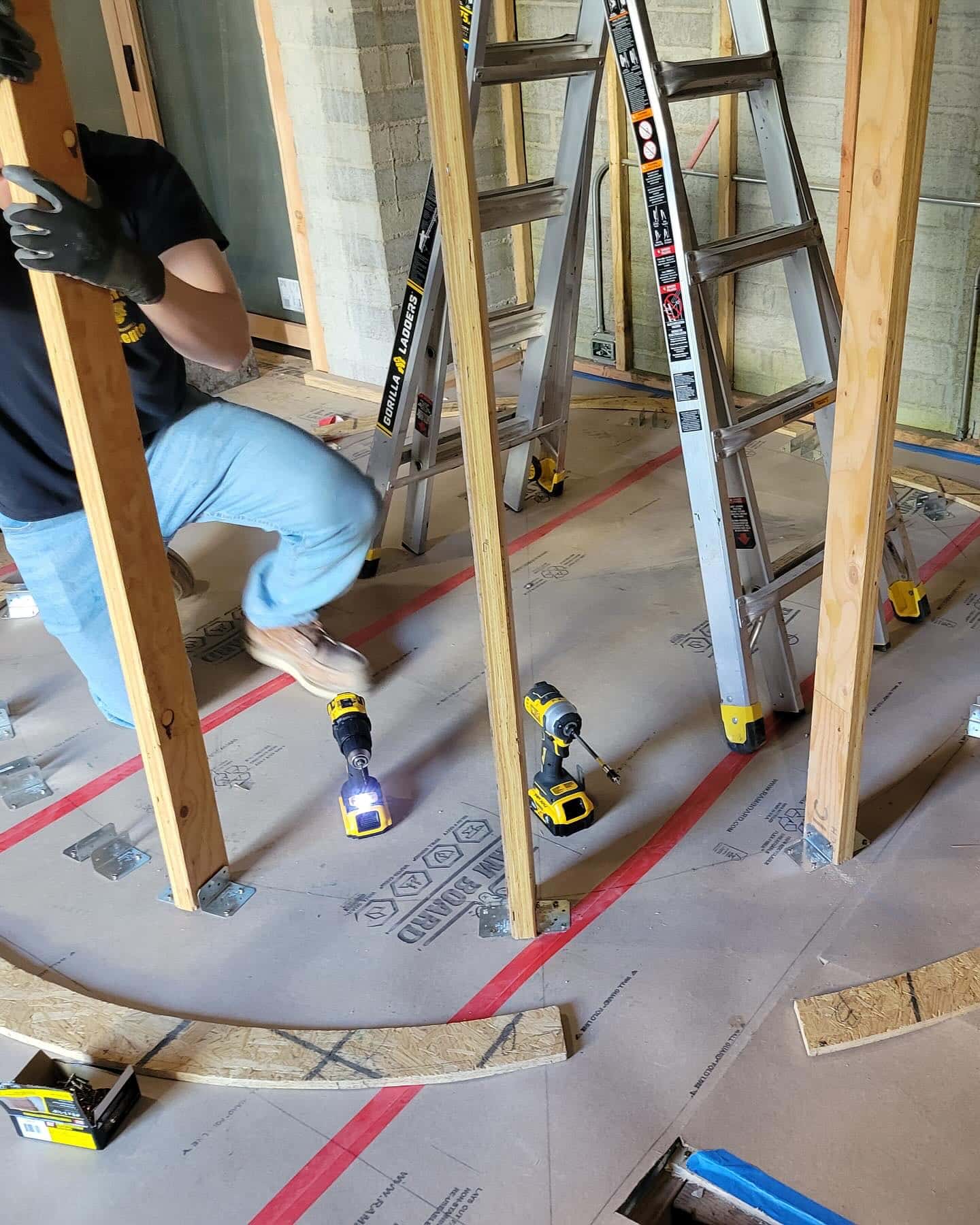
The first step in shaping the spiral stair began on the floor. We laid out a precise circle to define the stair’s overall diameter and central axis. Around that perimeter, we mounted a series of 2×4 studs to create a vertical frame, acting as a flexible guide for the curve of the inner stringer. These studs weren’t perfectly evenly spaced—what mattered more was that they followed the arc consistently enough to form a smooth, continuous bend. This temporary scaffold allowed us to begin shaping the laminated structure to follow the desired spiral geometry.
Formwork
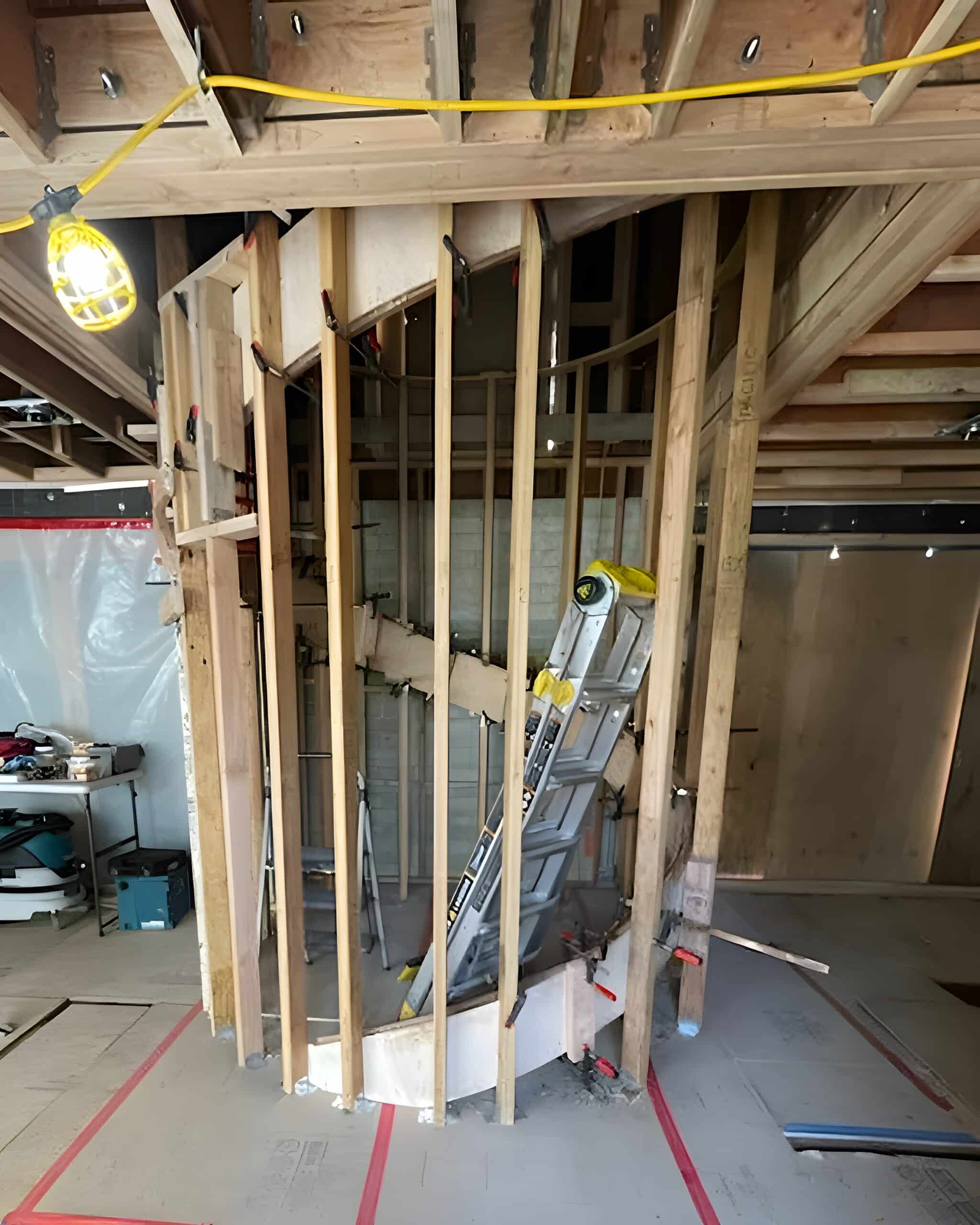
This image captures the earliest phase: drawing out the circle and beginning to fasten the vertical studs. This step was crucial in establishing both radius control and elevation rhythm. The placement of these verticals acted as bend points for the plywood layers to follow. In essence, we were building a mold—not for pouring, but for bending. The stud spacing didn’t need to be mathematically perfect, but consistent enough to guide the layered lamination that would follow.
Structure
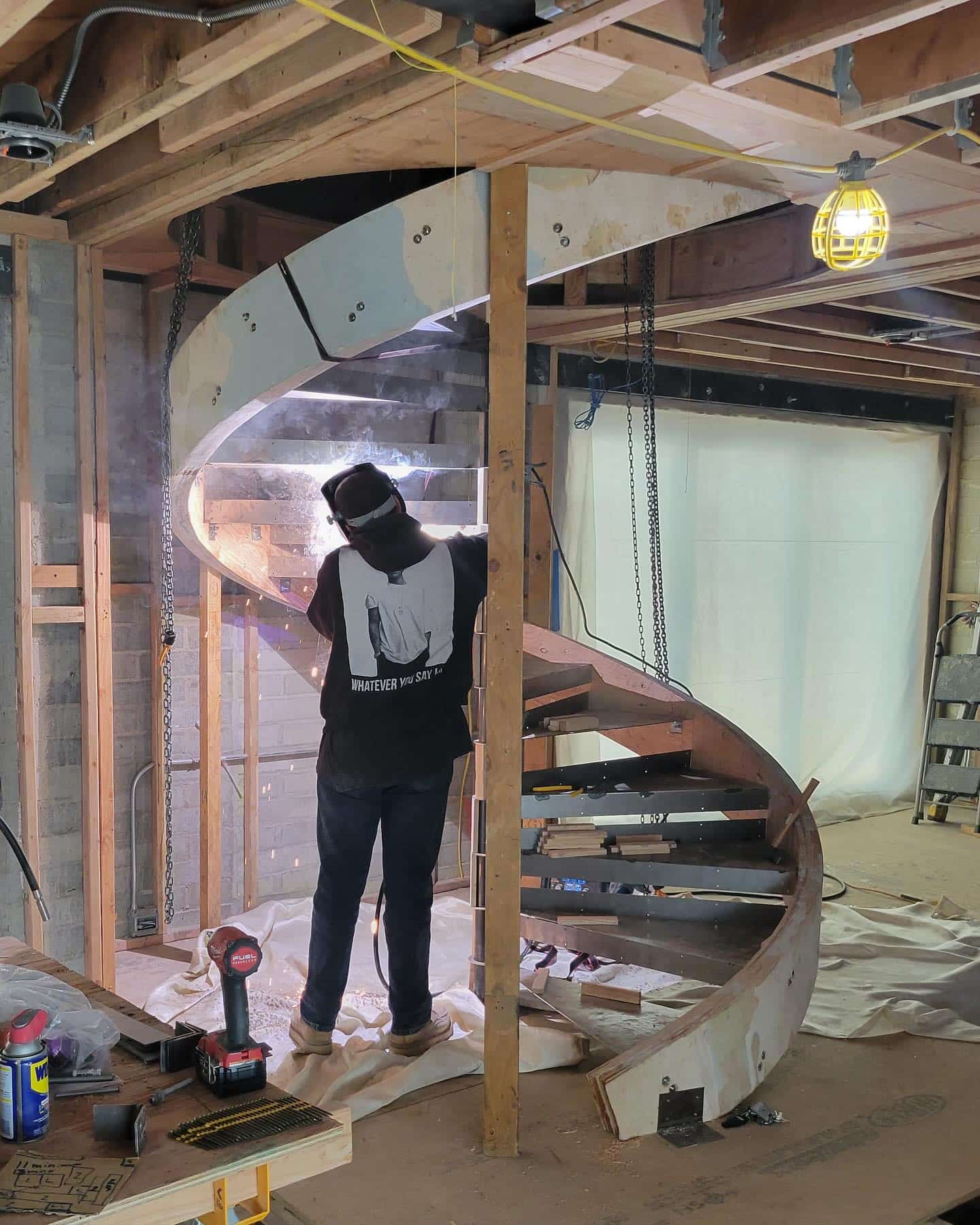
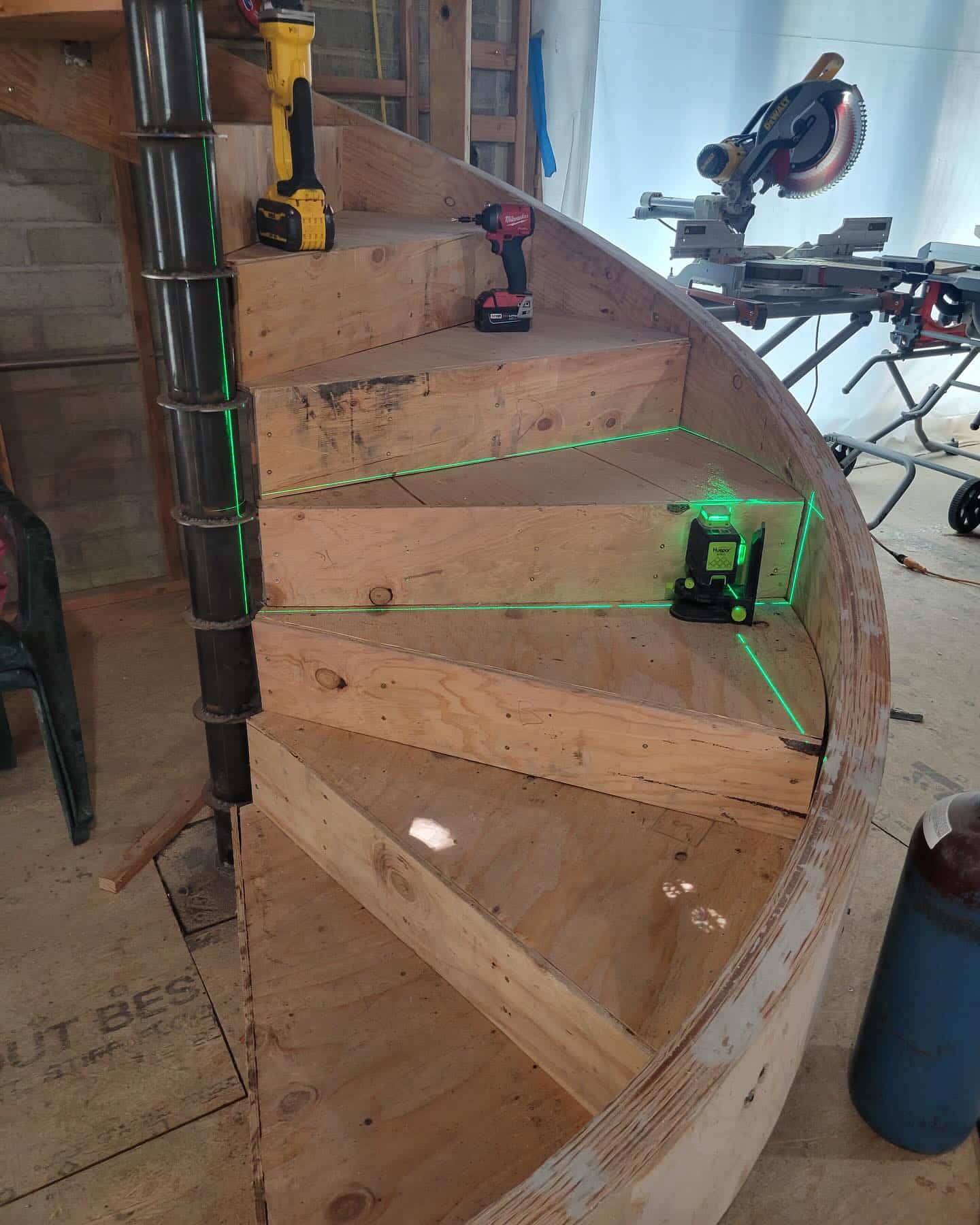
Once the laminated stringer cured, we removed the temporary studs. At this point, the structural steel column—now anchored at the stair’s center—was in place. Each metal tread was then bolted to the column and aligned with the curve of the stringer. These treads were laser-cut using a waterjet for high precision. Welded connections to the column ensured stability, while bolted ends tied back to the stringer, creating a dual-support system. The geometry of each tread was custom—following both the radial curve and vertical rise with intention.
Cladding
With the steel skeleton in place, we began wrapping the treads in plywood. This cladding phase was critical—not just for surface prep, but for ensuring that every step was flat, flush, and aligned. Here, we’re checking level and tread thickness before final finishes. The plywood served both as a filler and an interface between raw structure and refined material. This phase also gave us a chance to adjust for any inconsistencies introduced during welding or mounting.
Refinement
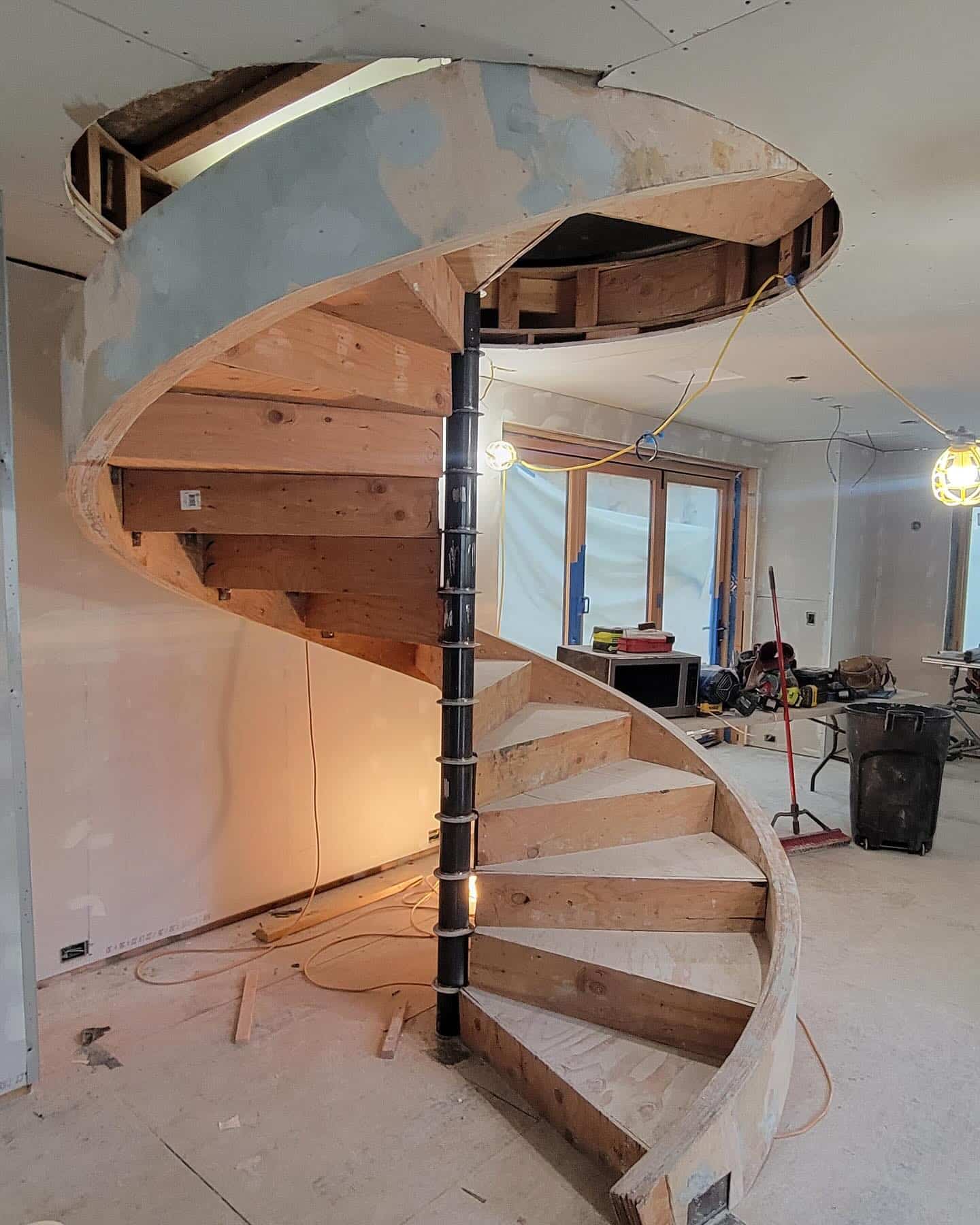
By this point, the rough stair was fully assembled. The stringer was complete, the treads wrapped, and all components secured. We then concealed any exposed fasteners along the outer face of the stringer using a grey filler—similar to automotive body filler, but formulated for wood. This step is often referred to as bodywork in fabrication—a surface prep technique that creates a seamless skin ready for finishing. It’s a detail that won’t be seen in the final product, but it defines how clean the final read will be.
Verification
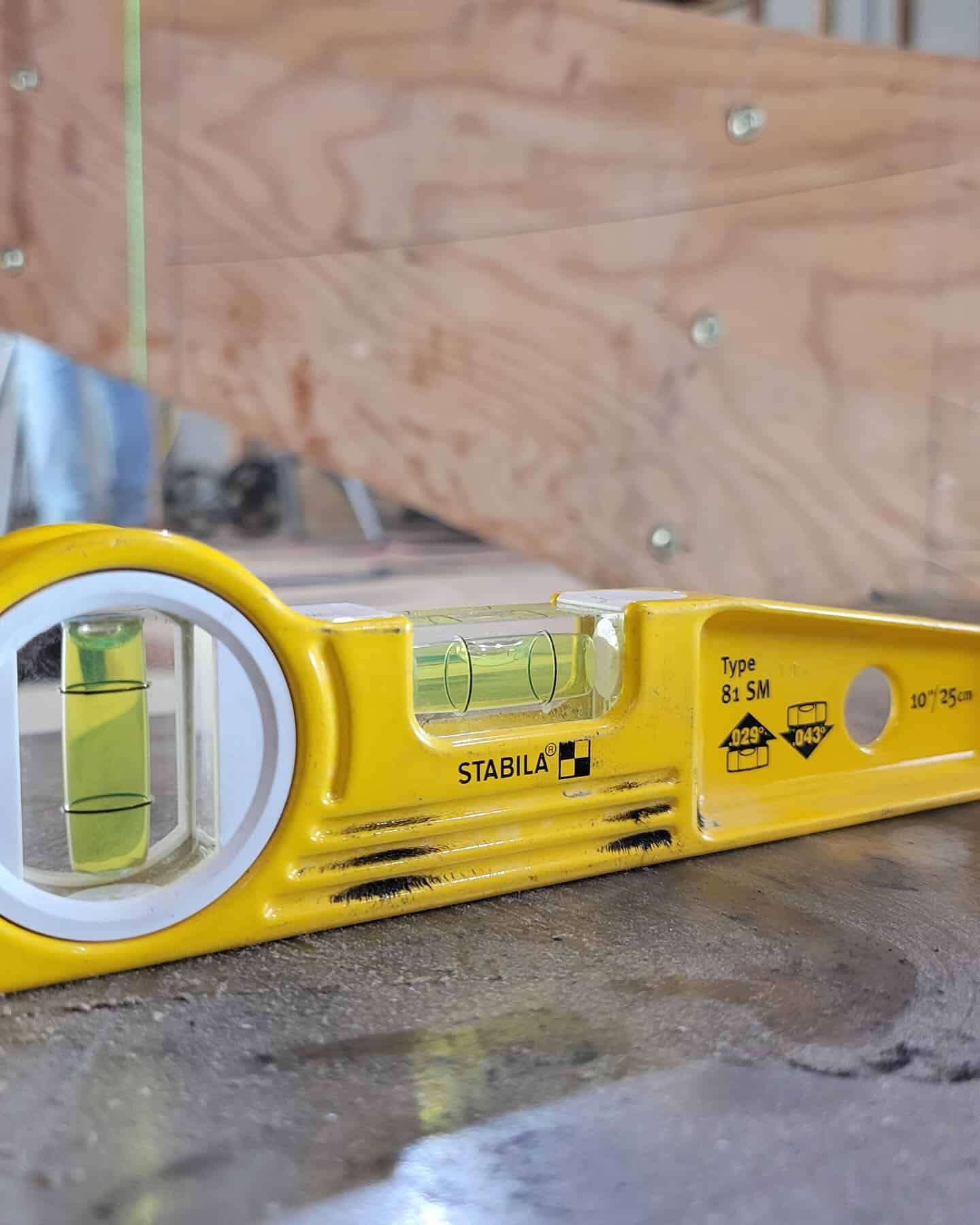
Before final wrapping, we verified that each tread was perfectly level. This image shows a simple but essential moment: confirming that the stair doesn’t slope or shift across its rise. With curved stairs—especially those built by hand and eye—it’s easy for cumulative tolerances to create subtle shifts. Leveling is the final check before introducing solid wood finish materials. It’s the last chance to correct the plane before locking in the look.
Finish
Here, the spiral stair reaches its final form—wrapped in finished white oak. The grain runs cleanly along the hand-fitted panels, hugging each curve with precision. The cavity along the outer edge has been routed to receive a curved glass guardrail, which will follow the same geometry without breaking visual rhythm. What began as a raw form now reads as a sculptural centerpiece—every hidden bolt, every filler coat, every plywood layer serving the clarity of this final moment.